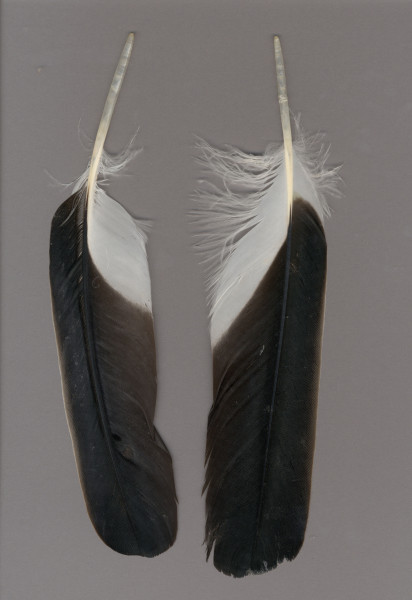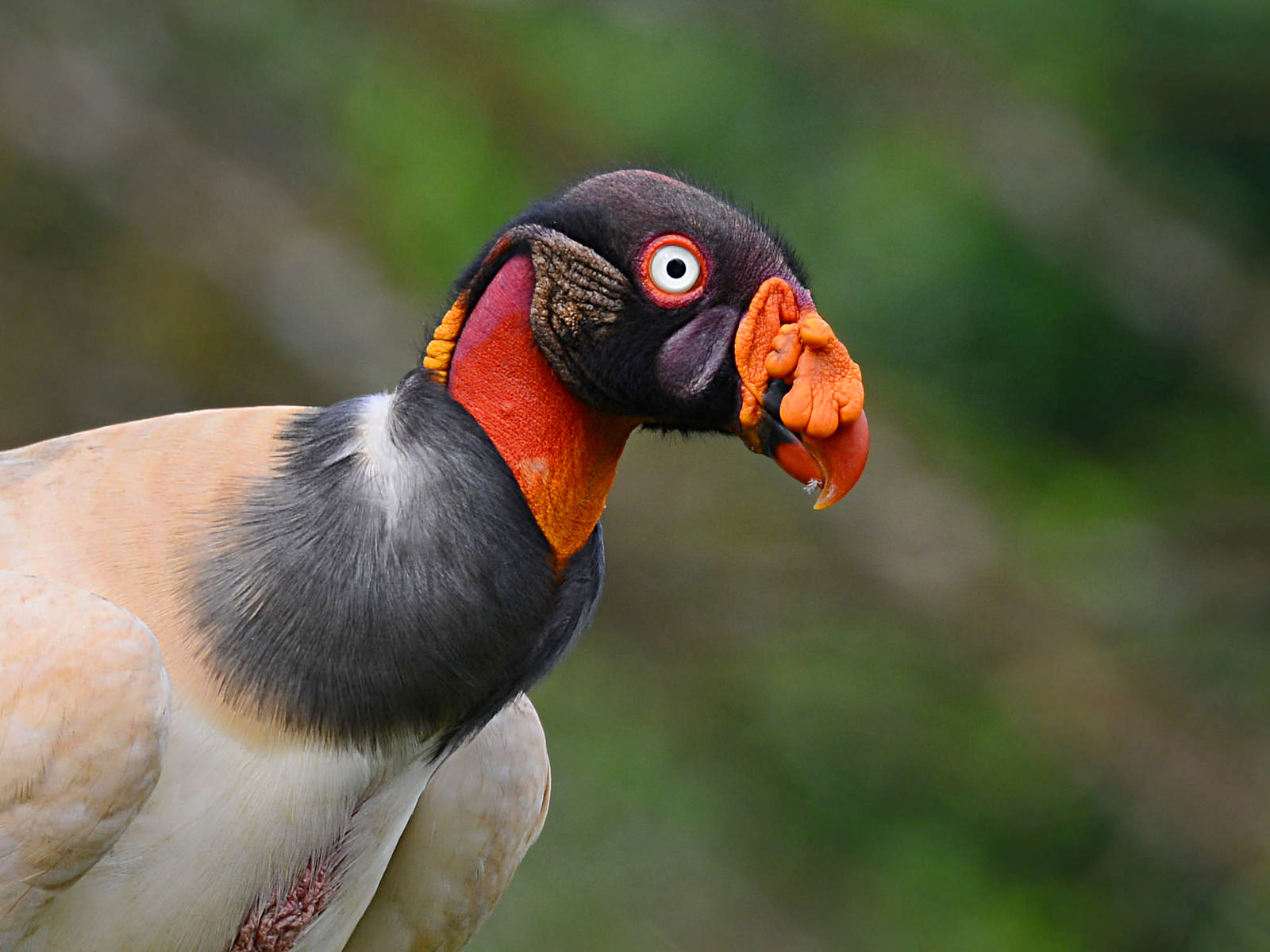


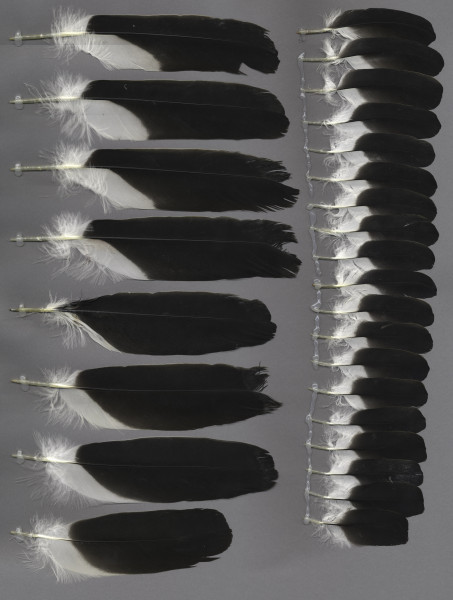
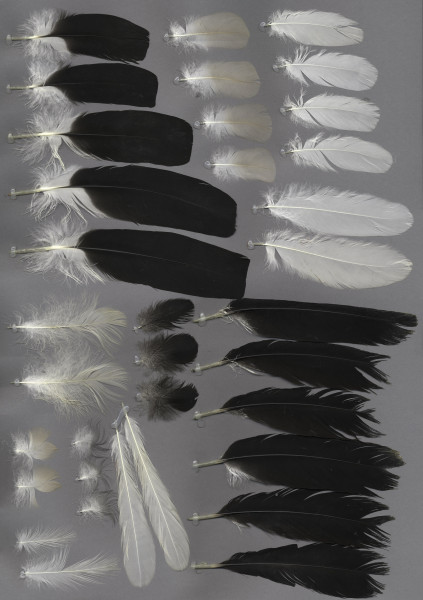


Der Königsgeier ist eine recht kleine Geierart - seine Federn sind nur etwas größer als die eines Rotmilans. Adulte Vögel besitzen tief schwarze Hand- und Armschwingen. Die Innenfahne besitzt eine rein weiße, scharf abgegrenzte Fläche an der Basis. Die Spulen sind weißlich, der Kiel im oberen Verlauf schwarz. In den inneren Armschwingen vergrößert sich die weiße Fläche ein wenig auf die Außenfahne. Auf den Schirmfedern ist die weiße Fläche konkav statt konvex geformt. Die Schulterfedern zeige eine ähnliche Färbung mit geringerem Weißanteil.
Die Steuerfedern sind ebenfalls satt schwarz gefärbt mit einer kleinen weißen Aufhellung der Innenfahnenbasis. Die Steuerfedern sind relativ gleichmäßig in ihrer Länge, die S6 ist jedoch meist die längste (ganz leichte Gabelung des Steuers).
Gegensätzlich zur Färbung der Federn auf der Körperoberseite sind die Unterflügeldecken und Achselfedern rein weiß gefärbt.
Jungvögel besitzen noch nicht die satt schwarze Färbung der adulten Vögel sondern einen etwas blasseren, stumpferen Braunton. Die Aufhellung der Innenfahnenbasis ist etwas "dreckiger" cremefarben weiß. Die Unterflügeldecken sind dunkelbraun mit einer weißen Basis.
Die längste Handschwinge ist meist die H7, in der Außenfahne verengt sind H4 (undeutlich) bis H8 oder H9. Die äußersten Handschwingen sind vollständig verengt. Die unverengt Außenfahne von H9 kann aber teilweise kaum noch erkannt werden.
| feather | number | longest |
|---|---|---|
| primary | 10 per wing | no data available |
| secondary | 19-20 per wing |
approx. 319.5mm
n=1 S14 (100%) |
| retrix |
12
|
no data available |
|
do_not_translate_yet:measurements_remarks.title
do_not_translate_yet:measurements_remarks.number_of_individuals ndo_not_translate_yet:measurements_remarks.selection_of_individuals do_not_translate_yet:measurements_remarks.method_titledo_not_translate_yet:measurements_remarks.method do_not_translate_yet:measurements_remarks.percentage_titledo_not_translate_yet:measurements_remarks.percentage |
||